
What is
ALLOS Secure Connect governs how enterprise data is read from and written back to core systems (SAP, databases, APIs). Not just a connector layer—a policy-driven execution and control layer for data movement and operational write-back.
See More details: Secure Connect Scope (read, transformation, write-back, monitoring)
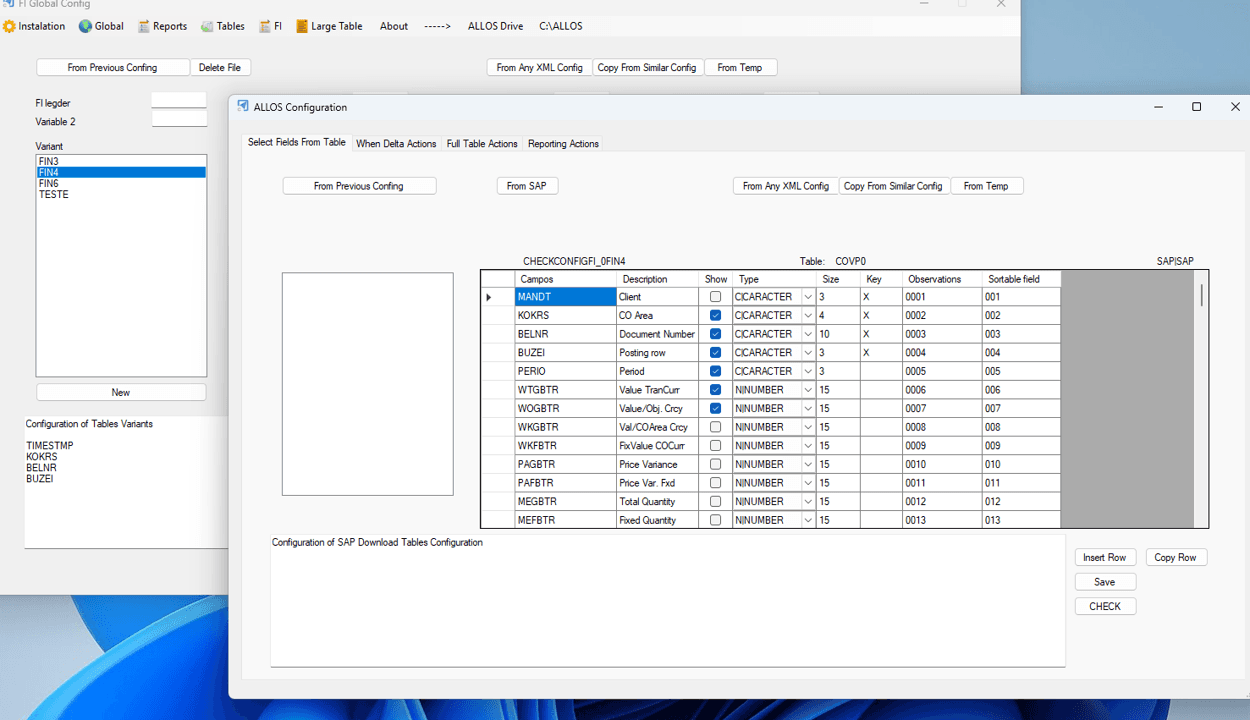
Uncontrolled exports, ad-hoc connectors, and manual corrections create security exposure, delayed updates, and data quality issues. This creates disconnect between what Finance signs off and what systems actually contain.
More Information: Why ALLOS Redefines Security for the Enterprise

Manages inbound and outbound flows. Retrieves and organizes data for reporting. Supports controlled write-back: postings, API calls, and data cleansing—defined centrally, reused consistently.
Write-back is rule-driven, validated, permissioned, and logged. IT manages access, security policies, transformations, and validations.
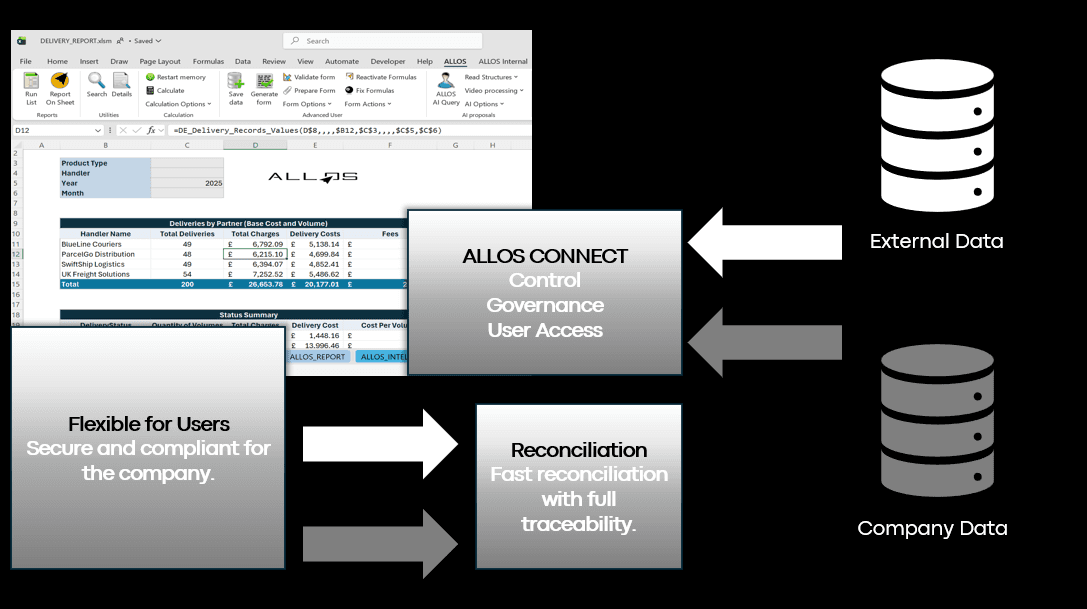

Execution inside company infrastructure. Permission control, validation rules, full auditability.
Rules versioned with clear ownership—supporting separation of duties (who defines vs. who executes).
Timely, accurate data. Fewer manual corrections. Better data quality. Reduced operational risk.
Typical uses: SAP month-end postings, governed data reuse in Power BI, Integration with Operational Platforms.